
EV Charger Installation
Home EV charging setup with the right circuit, the right placement, and enough panel capacity to handle daily charging.
A practical guide to what changes EV charger pricing in Tulsa homes and why panel capacity matters as much as the charger itself.
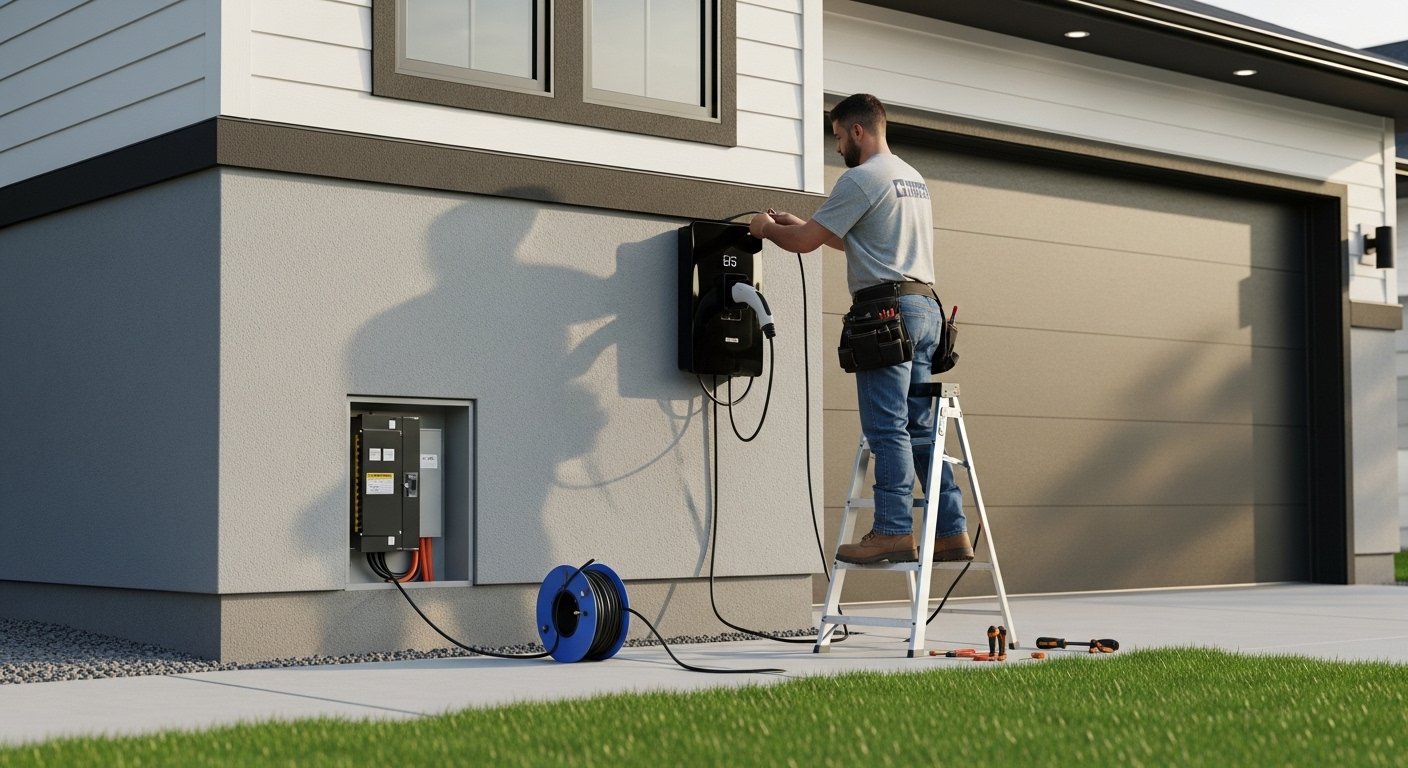
Homeowners often start with the charger model, but the installation cost usually depends more on the house than the charger. The panel location, available breaker space, circuit length, and overall electrical capacity all influence the final price. A garage charger installed right next to a healthy panel is a very different project than one that needs a long run or a service upgrade.
Projects stay simpler when the panel has room, the service has capacity, and the charger location is close. In that case, the work is mainly about adding the correct dedicated circuit and finishing the installation neatly. Homeowners often budget more confidently once they understand that the charger installation is straightforward only if the rest of the home’s electrical system is ready for it.
The big cost drivers are long wiring runs, finished-space routing, larger amperage charging plans, and panel limitations. Many Tulsa homes still operate with service equipment that was never designed with EV charging in mind. If the panel is full or the service is undersized, the charger project can become part of a bigger upgrade decision.
In many cases yes. Installing before delivery lets the homeowner decide on location, breaker sizing, and parking arrangement without rushing. It also helps avoid the frustrating period when the new vehicle is home but daily charging is not set up correctly.
The value of home charging is convenience and consistency. A properly installed Level 2 charger makes daily commuting easier, reduces dependence on public charging, and turns the garage into a reliable overnight refueling point. For many homeowners, that reliability matters more than the lowest upfront quote.
Home EV charging setup with the right circuit, the right placement, and enough panel capacity to handle daily charging.
Upgrade an undersized, outdated, or overloaded panel so your home can safely support modern electrical demand.
Add, replace, or upgrade outlets and switches so rooms are safer, more convenient, and better matched to how the home is actually used.
An EV charger estimate usually depends on panel capacity, charger location, wiring distance, and whether any electrical upgrades are needed first.
Panel capacity, distance to the charger location, charger amperage, and routing complexity are the biggest factors.
Yes. Some homes do not have enough capacity or breaker space for the charger without additional work.
It can be, but the actual difference depends on the panel location and wiring path.
Yes. Placement affects convenience every single day, so layout planning matters.
These articles are meant to answer common homeowner questions before service is scheduled. A site visit is still the best way to confirm the right solution for your specific home.
| Project Type | Typical Cost |
|---|---|
| Panel upgrade (100→200 amp) | $2,500 – $4,500 |
| Panel replacement with circuits | $3,500 – $6,500 |
| Panel + EV charger prep | $4,500 – $7,500 |